
BLOG & NEWS
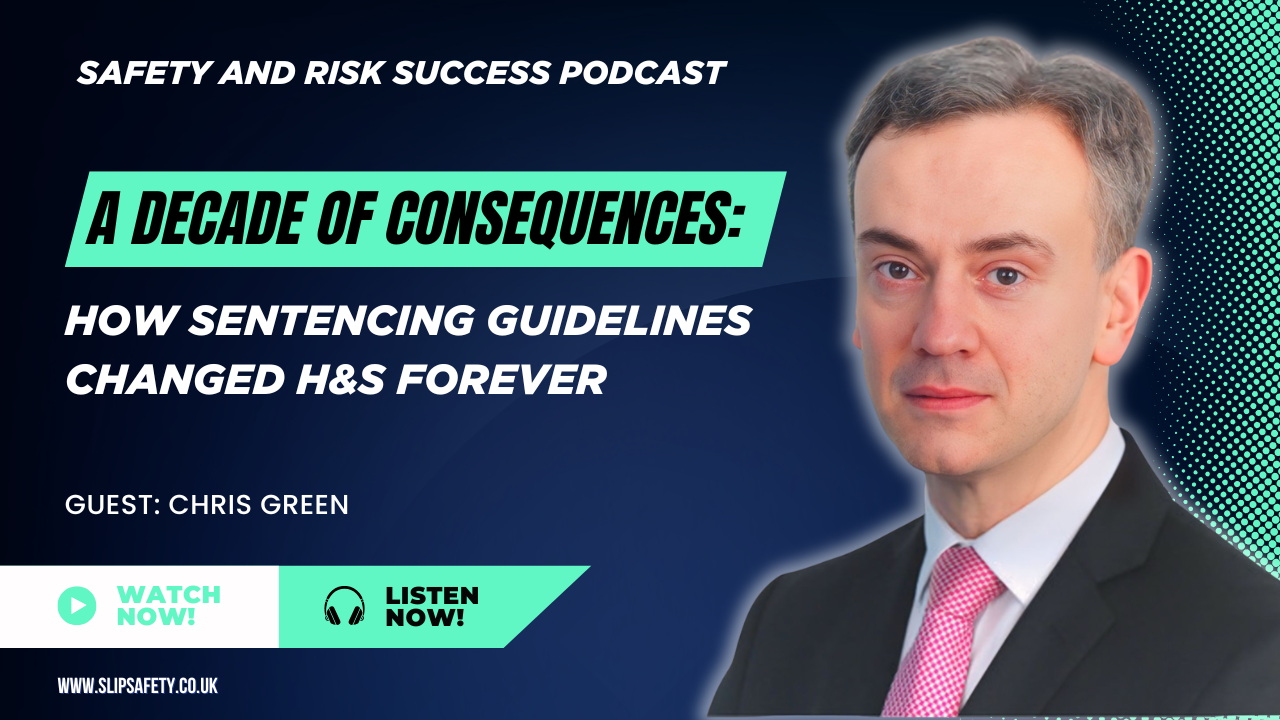
A Decade of Consequences: How Sentencing Guidelines Changed H&S Forever, With Chris Green

Before you think “it won’t happen here”, consider this: a company was fined £10,000 for a serious machinery incident in early 2016. Just weeks later, a similar case resulted in a £1.6 million fine.
Ten years after the sentencing guidelines transformed the health and safety legal landscape, the consequences are impossible to ignore. Fines are higher, accountability has sharpened, and Organisations are increasingly judged on exposure to risk rather than actual harm. I sat down with leading health and safety lawyer Chris Green to explore what has changed, where many businesses still get caught out, and why directors can no longer afford to view safety as something that sits solely with the safety team.
Whether you’re advising the board, managing risk on the ground, or trying to influence decision-makers, this conversation offers valuable insight into how the legal landscape continues to evolve.
Highlights
- Why fines increased: Designed to reflect company size and turnover
- Risk versus harm: Exposure alone can trigger prosecution
- Very large Organisations: Courts can go beyond guideline thresholds
- Governance matters: Directors must actively engage with safety
- Paperwork isn’t enough: Implementation is what courts examine
- Aggravating factors: Repeated exposure and ignored warnings increase penalties
- Small business challenge: Compliance burdens remain disproportionately difficult
- Looking ahead: New legislation may increase corporate liability
Resources and actions:
- Sign up for a future Safety Roundtable: https://safetyroundtable.co.uk/
- Connect with Chris on LinkedIn: https://www.linkedin.com/in/chris-green-70a899a/
- Connect with Christian on LinkedIn: https://www.linkedin.com/in/christian-harris-slip-safety/