

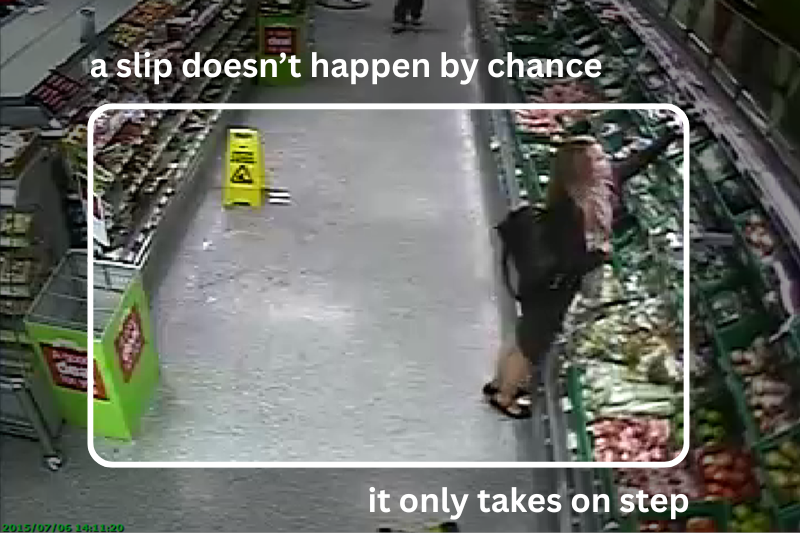
It looked like a small issue… until it wasn’t.
He was a regular. A well-known member of the local community, in good health, active and independent. The kind of person who visited the same shop most days without a second thought. On that day, nothing felt different. As he walked through the store, there was a wet floor sign in place. Nearby, a leak from a refrigeration unit had been creating a puddle. It had been an ongoing issue, not a sudden one. Somewhere between the sign, the leak and the assumption that the risk was under control… he slipped. He hit his head. And a couple of days later, he passed away.
It’s a difficult story to read. But it highlights something important.
This wasn’t a rare or unpredictable event.
- The floor was wet.
- The hazard was known.
- A warning sign was in place… and yet, it still happened.
As highlighted in Christian’s best seller book, Slipology, signage alone is not an adequate control. It may warn of a risk, but it does not remove it. That’s where many environments unknowingly fall short. Because the measures that are most commonly used like warning signs, reactive cleaning, temporary fixes often sit at the surface level. They create visibility, but not necessarily safety. In this case, the underlying issue remained. The leak continued. The floor remained unsafe. And access to the area wasn’t properly controlled. What followed was not just a tragic loss of life, but also legal action and a significant financial penalty for the organisation involved.
The key takeaway isn’t about blame. It’s about understanding how easily this can happen. Slips don’t usually come from one major failure. They come from small gaps:
- A recurring issue not fully resolved
- A control measure that doesn’t go far enough
- A risk that feels “managed” but isn’t
And over time, those gaps align.
The organisations that are leading in this space are approaching it differently. They’re not relying on warning signs alone. They’re not assuming floors are safe because they look clean.
They are:
- Removing or controlling contamination at source
- Preventing access to unsafe areas when needed
- Ensuring floors remain safe even when wet
Because ultimately, the goal isn’t to warn people about risk. It’s to remove it.
